Bill Browder has made it his mission to draw the world's attention to the abuses of power the Russian people suffer every day.
With
his book, "Red Notice: A True Story of High Finance, Murder, and One
Man's Fight for Justice," he puts the world on notice: The Putin regime
will ruthlessly go after anyone and everyone who dares to take issue
with their policies or with their murderous defiance of all ethical and
moral behavior.
I became interested in this story when I
heard an interview with Bill Browder about the Magnitsky Act, which
Browder had worked tirelessly to bring to Congress and get passed by
Congress and finally signed by Pres. Obama in 2012.
This Act, named for Russian citizen Sergei Magnitsky, was written "to punish Russian officials who were
thought to be responsible for the death of Sergei Magnitsky by
prohibiting their entrance to the United States and their use of its
banking system," as Wikipedia puts it.
Wikipedia has to be careful with its wording, thus "Russian officials who were THOUGHT to be responsible for..."
We
do not have to be this careful, as we can see, by reading the book:
These officials were indeed, as shown in "Red Notice," responsible for
Magnitsky's death, as they sentenced him wrongly to be imprisoned and
made sure that he was transferred from one hell-hole to another,
starved, tortured, and denied medical treatment.
The
response of the Putin regime and the 22 oligarchs who have made
millions and billions of dollars off of the misery of the Russian people
over the past few years has been a massive, collective shrug of the
shoulders.
Ah, so what?
Except that they're mad, really mad, so mad that Putin made it impossible
for American citizens to continue to go to Russia to adopt orphans, which they
had been doing for years. Oh, and, then to blame the American government for
the fact that Russian orphans are languishing in hellish conditions throughout
their country. (Unfortunately for Putin et al., the Russian people are well
aware of the plight of these children and the reasons for their plight, and
have dared even to demonstrate in the streets, finally forcing the Russian
government to build some more orphanages. Not enough, though.)
Dear Readers, I hope you will read this book. It's even better than the one
I reviewed last Sunday. In fact, it's much, much better, because even though it
deals with a sad and painful and tragic experience, it's about people, like
Sergei Magnitsky and the author himself, and many others, who have bravely
fought evil. (In contrast, "Devil's Bargain" is about two people, and
many others, who come close to embodying evil.)
I want you to read this book because I don't have time to summarize its
contents. If I did, I would, because Sergei Magnitsky and the other martyrs
(yes, martyrs) who have been killed by Putin and his henchmen are so brave it
makes your heart ache.
On the other hand, I can't summarize the writing style of Bill Browder, who
makes every detail count, starting with his own life and the lives of his
parents and grandparents. (His grandfather, Earl Browder, was head of the
American Communist Party and ran for president representing that party in 1936
and again in 1940.) They were all remarkable people: intellectuals with courage
and grit, hard working and determined to do what they believed to be right.
So there are two reasons to read the book: It's so full of the honest but
painful truth about life in today's Russia, and it's so well written.
So, you don't care about life in today's Russia? But you should. Because
this is impacting our life here in America right now. The Russian government is
using the Magnitsky Act and its own response to that Act in order to persuade
ignorant Americans (like Donald J. Trump and his entire family and retinue,
apparently), AKA "useful idiots," to try to influence our past and
future elections.
I checked the book out of my wonderful local library, The
Camas Public Library, after putting a hold on it weeks ago,
but I'm going to buy it from Amazon as soon as I can, and will thereafter press
it on my unwitting but willing friends to read.
(I see it's available on Amazon for just under $13.00. Also at Walmart for $3.99---really? I'm going to check that out!)
Sunday, September 17, 2017

Friday, September 15, 2017
Fiction Friday: The Rosie Effect
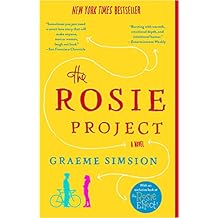 First, there was The Rosie Project.
 Now, there's The Rosie Effect. It's almost funnier than the original project. Funny, with a tinge of sad and edge of hysteria.
Don Tillman, having won the affection of Rosie, now has to figure out how to stay married and to deal with the birth of a child.
Mr. Tillman is not at all average, and he himself doubts that he will make it as a father. Poor Rosie does, too, as do all the people who know him. But (spoiler alert) he eventually proves that he's fit for the job.
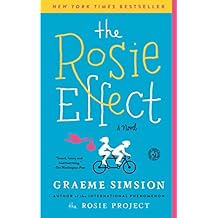
First, though, he has to figure out just what Rosie needs of him as the father of their child. It's not to take over her dietary needs and exercise schedule. It's not to design a sound-proof crib and accident-proof baby stroller. It's not to learn how to deliver a baby.
No spoiler alert here. You, Dear Reader, will have to figure out for yourself what Don Tillman figures out about being a father.
And you really, really, REALLY should read both of these books. First, The Rosie Project, and then The Rosie Effect. No kidding. You'll love them both. I promise. Both are available from Amazon and every other bookseller on the planet. If you can't find them, let me know, and I'll loan you my copy.
Sunday, September 10, 2017
The Sunday Book Review: Devil's Bargain
Joshua Green has put together the complete, and completely unnerving, story of Donald J. Trump's association with Steve Bannon and how Bannon and his minions got Trump elected.
The subtitle of "Devil's Bargain" is "Steve Bannon, Donald Trump, and the Storming of the Presidency." One of the first and last and most important and repeated elements of this "storming" of the presidency is Bannon's hatred of Hillary Clinton.
Mrs. Clinton, by the way, was right about the "vast right-wing conspiracy," which Bannon had a huge hand in starting and continuing. The rest of the book is about Bannon's life and political and social views, which are abhorrent; and how Trump connected with him.
This is another book I'm glad I didn't pay money for. It's a good book, but it's about a painful subject and its two main characters are deplorables.
I placed a hold on it at my local library as soon as I heard about it, so it took me about four weeks to get it, because so many other people had placed holds on it. Obviously I'm not the only person in the Fort Vancouver Regional Library's area who is fascinated by the dirty laundry of the Trump campaign and the unscrupulous, lying, foul-mouthed trolls who struck more than one bargain with the devil to get Trump elected.
There, I've summed up the book for you so you won't have to even go to the library to read it. It's not worth your time and gas money to drive there, and certainly not worth your time to do more than skim through it, now that you know the gist of it.
But if you're fascinated by the history of this disastrous election, go ahead and read through it as carefully as I did. It's really well written, factually correct, and journalistically sound, i.e., unbiased.
It even has chapter notes and an index so if, for instance, you've forgotten by the end what's so significant about Benedictine College Prep, you can look it up and find the reference at the beginning.
But, really, don't bother.
The subtitle of "Devil's Bargain" is "Steve Bannon, Donald Trump, and the Storming of the Presidency." One of the first and last and most important and repeated elements of this "storming" of the presidency is Bannon's hatred of Hillary Clinton.
Mrs. Clinton, by the way, was right about the "vast right-wing conspiracy," which Bannon had a huge hand in starting and continuing. The rest of the book is about Bannon's life and political and social views, which are abhorrent; and how Trump connected with him.
This is another book I'm glad I didn't pay money for. It's a good book, but it's about a painful subject and its two main characters are deplorables.
I placed a hold on it at my local library as soon as I heard about it, so it took me about four weeks to get it, because so many other people had placed holds on it. Obviously I'm not the only person in the Fort Vancouver Regional Library's area who is fascinated by the dirty laundry of the Trump campaign and the unscrupulous, lying, foul-mouthed trolls who struck more than one bargain with the devil to get Trump elected.
There, I've summed up the book for you so you won't have to even go to the library to read it. It's not worth your time and gas money to drive there, and certainly not worth your time to do more than skim through it, now that you know the gist of it.
But if you're fascinated by the history of this disastrous election, go ahead and read through it as carefully as I did. It's really well written, factually correct, and journalistically sound, i.e., unbiased.
It even has chapter notes and an index so if, for instance, you've forgotten by the end what's so significant about Benedictine College Prep, you can look it up and find the reference at the beginning.
But, really, don't bother.
Saturday, September 9, 2017
And now for something beautiful
Please enjoy this song and video: "My Kindness Shall Not Depart from Thee," from the movie "Ephraim's Rescue."
(And then, if you haven't already watched the movie, you can buy it from Deseret Book, Amazon, or Walmart. Yes, Walmart!)
(And then, if you haven't already watched the movie, you can buy it from Deseret Book, Amazon, or Walmart. Yes, Walmart!)
Friday, September 8, 2017
Fiction Friday: Mythic Imagination
"Mythic Imagination" is a collection of short stories written by Joseph Campbell. Only one of them was ever published while he still lived. This book of "Collected Short Fiction" was put together --- collected -- and copyrighted by the Joseph Campbell Foundation.
According to the book's jacket, the seven short stories are "extraordinary." But I'll tell you what: Even the one that was published in Campbell's lifetime is not extraordinary in any way. "Strictly Platonic" has a lame attempt at some kind of O.Henry twist at the end, and, because I know no one who reads this will ever read "Strictly Platonic," I'll tell you what the twist is:
The strictly ethical professor who has decided to flunk the star of the football team, rendering him unable to play in the most important game of his college career, which the dean is sure will mean no more funding for the college.
The professor is in love with the dean's daughter (of course). And the dean won't let him marry the daughter unless he gives the football player a passing grade. So when the football player and his classmates challenge the professor to explain the meaning of "strictly platonic," he ends up in a fist- fight with the football player. The big twist: the nerdy professor wins the fight, which brings millions of dollars into the school's funds, and the professor and the dean's daughter get married and, as the story ends, are planning how to spend their millions of dollars.
See what I mean?
So, I got this book from the library b/c I'm fascinated with Joseph Campbell's writings on mythology. And the Joseph Campbell Foundation claims that the seven stories they've collected are full of deep mythological meaning. Which may be true. I don't know. I don't care. I didn't read any of the other stories after I read this one. If Dr. Campbell couldn't publish his adolescent-male-fantasy drivel while he was alive, when people cared about stupid stories like this, why would anyone read it now?
Back to the library with this one, and a sigh of relief that I didn't pay any actual money for it. There's probably some deep mythological meaning in that. Because, as Angela pointed out the other day, "Everything is about money, isn't it!" But, again, I don't know, and I don't care.
According to the book's jacket, the seven short stories are "extraordinary." But I'll tell you what: Even the one that was published in Campbell's lifetime is not extraordinary in any way. "Strictly Platonic" has a lame attempt at some kind of O.Henry twist at the end, and, because I know no one who reads this will ever read "Strictly Platonic," I'll tell you what the twist is:
The strictly ethical professor who has decided to flunk the star of the football team, rendering him unable to play in the most important game of his college career, which the dean is sure will mean no more funding for the college.
The professor is in love with the dean's daughter (of course). And the dean won't let him marry the daughter unless he gives the football player a passing grade. So when the football player and his classmates challenge the professor to explain the meaning of "strictly platonic," he ends up in a fist- fight with the football player. The big twist: the nerdy professor wins the fight, which brings millions of dollars into the school's funds, and the professor and the dean's daughter get married and, as the story ends, are planning how to spend their millions of dollars.
See what I mean?
So, I got this book from the library b/c I'm fascinated with Joseph Campbell's writings on mythology. And the Joseph Campbell Foundation claims that the seven stories they've collected are full of deep mythological meaning. Which may be true. I don't know. I don't care. I didn't read any of the other stories after I read this one. If Dr. Campbell couldn't publish his adolescent-male-fantasy drivel while he was alive, when people cared about stupid stories like this, why would anyone read it now?
Back to the library with this one, and a sigh of relief that I didn't pay any actual money for it. There's probably some deep mythological meaning in that. Because, as Angela pointed out the other day, "Everything is about money, isn't it!" But, again, I don't know, and I don't care.
Sunday, August 13, 2017
The Sunday Book Review: Another Memoir ("Gringa")
Melissa Hart's "Gringa: A Contradictory Girlhood" is one of those books that makes you want to cry, and laugh, and think.
Melissa Hart has changed her name, legally, so I have no idea what her original birth certificate says her name is---and as I read about her early life, I can see why she felt it was a good idea to change it.
Also, she told a workshop at the Willamette Writers conference earlier this month this: "You should check with the people you write about in a memoir, to see if they are okay with what you have written about them. And you probably need to change the names of some of the people."
Also, she said, "You have to be willing to never see some people again. Never go to a family reunion, never be invited to a quinceanera, or a Christmas party, or anything else." In fact, she said she hadn't spoken to her father in more than 25 years, and she told us why. (I'm not going to tell that here, and she doesn't tell it in this book.)
And you can see why: This book is painfully honest, but so appealing in its honesty, and so funny at the same time, I could barely put it down. And I wanted to read more.
I bought a copy at the conference but didn't have a chance to ask Ms. Hart to autograph it for me. I couldn't get close to her, as she was being mobbed by people with questions to ask and personal stories to tell and advice to get.
That's the kind of person she is, the quality of teacher she is, and the optimistic message she gave at the conference. (Here's the conference info about her.)

Here's where you can buy "Gringa" from Amazon. Or, if you ask me, I'll give you my copy, not b/c it's not worth keeping, but b/c I want everyone who's interested to be able to read it.
And I'm going to order her other memoir, "Wild Within: How Rescuing Owls Inspired a Family," from Amazon, and when I finish reading it, I'll write about it here, and pass it on, too.
Friday, August 11, 2017
Fiction Friday: The School Ship Tobermory Books
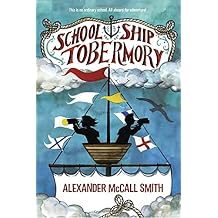
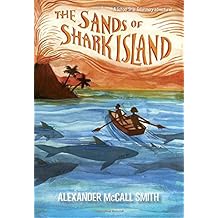 The only reason I know about these books is that I saw the first one, "School Ship Tobermory," on sale*** at the great Camas Public Library. I read it, rather, skimmed through it, in a very short time. I don't know who it's meant for.
Ah, here, from the Amazon blurb: It's the "first volume in a middle-grade adventure-mystery series perfect for boys and girls!" Note the exclamation point!
I don't get that whole system of grading for children's books, but I guess it could be read and enjoyed by a middle-schooler. I'm sending my copy to a grandson, and I'll let you know if he likes it. I doubt that he'll even pick it up, though, since the cover makes it look like it's for little kids, and the illustrations are disappointing at best.
Still, I don't want to criticize Alexander McCall Smith, whose writing I usually enjoy, and I see the reviews at Amazon are mostly very favorable. So maybe I'm just unaware of the reading habits of middle-graders, whoever those may be. Maybe all these kinds of books make me grumpy. Could be.
Still, when I saw that the second in the series, "The Sands of Shark Island," was available to check out at the great Camas Public Library, I placed a hold on it and read through it---skimmed, more like---in about 30 minutes. Same thing. Ho-hum, predictable, stock and standard "adventure story" for kids who (I think) are accustomed to more flash and bang.
Tell you what: Since I'm certainly not the one to make a judgment on how these books will go over with their intended audience, I'm going to see what some of my "middle-grade" friends think of these books, and I'll let you know.
For sale online at Amazon: Good Ship Tobermory, starting at less than $7.00, and
The Sands of Shark Island, just under $10.00, new, for less, used.
***The great Camas Public Library has two or three book sales every year, and I try to be one of the first ones there. So someone else had read this book and didn't want to keep it. That's a review in itself, isn't it.
Subscribe to:
Posts (Atom)